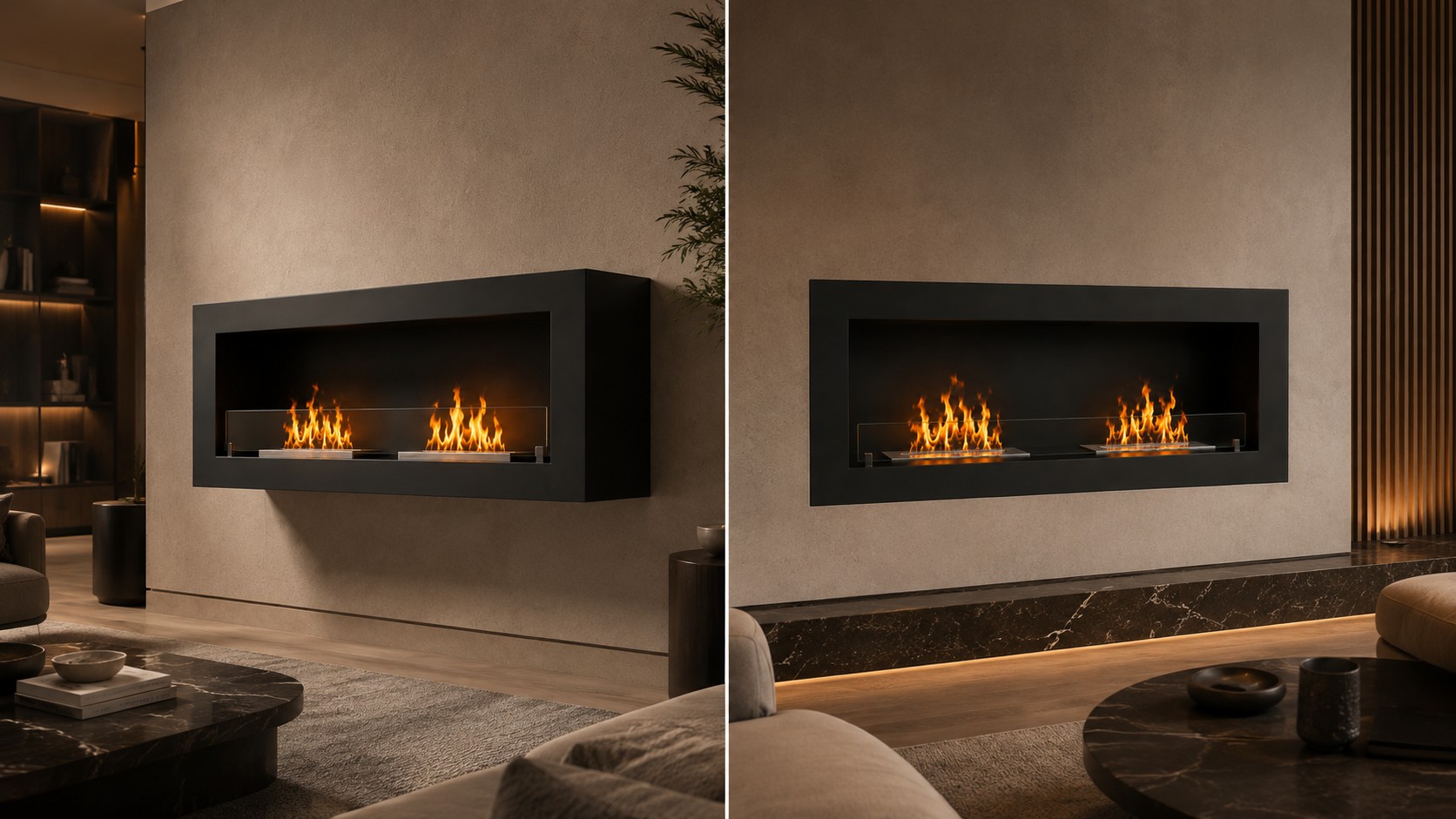
From the front, a wall-mounted fireplace and a built-in fireplace can look surprisingly alike. The real difference appears when the project reaches the wall. One format is designed to sit on the finished surface as a complete object; the other becomes part of the wall itself and needs the installation to be planned accordingly.
For a professional buyer, that distinction matters. The right choice depends less on which image looks better and more on the type of project, the stage of the job and how much installation work the customer is prepared to take on.
Wall-mounted works well when the fireplace needs to arrive as a finished object
A wall-mounted model is usually the simpler route when the goal is speed, straightforward fitting and a clear decorative presence. It behaves more like a finished furnishing element: it arrives complete, it is visually defined, and it does not depend on recess work to achieve its final look.
That makes it attractive for retail-led projects, refurbishments and situations where the customer wants a strong fireplace effect without turning the wall into part of the construction process.
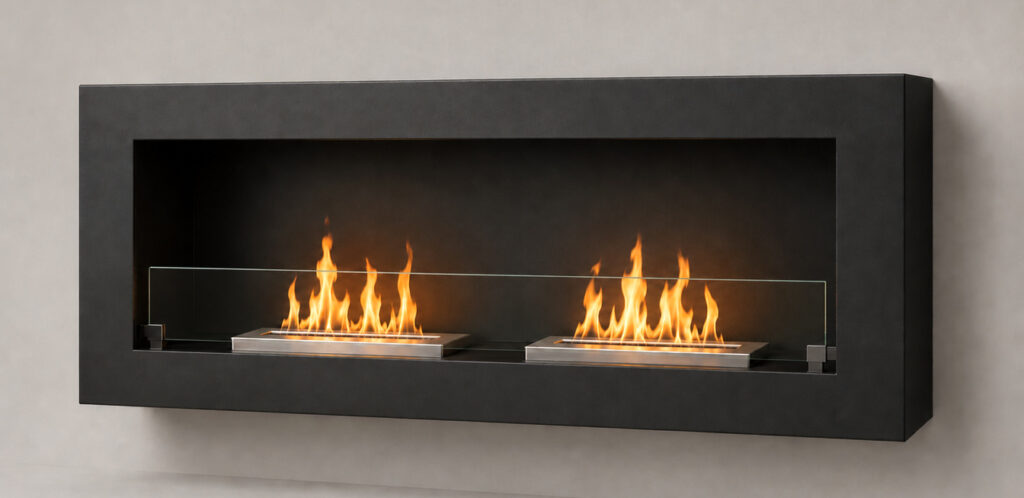
Built-in is the better fit when the fireplace should feel integrated
A built-in fireplace tends to work better when the project calls for a more architectural result. Instead of sitting on the wall, it becomes part of it. The effect is cleaner, more integrated and often more aligned with bespoke interiors, design-led residential work or contract environments.
This is also why the decision should be made early. Once the built-in route is chosen, the wall preparation and overall coordination become part of the project rather than an afterthought.
The choice often depends on timing as much as aesthetics
Many buyers start by comparing appearance, but in practice timing is often just as important. If the fireplace is being selected for a completed or nearly completed room, a wall-mounted format can be the more natural solution. If the fireplace is being specified during the planning phase, a built-in version may offer more freedom to create a cleaner final result.
In other words, the best format is not simply the one with the best front view. It is the one that matches the stage of the job.
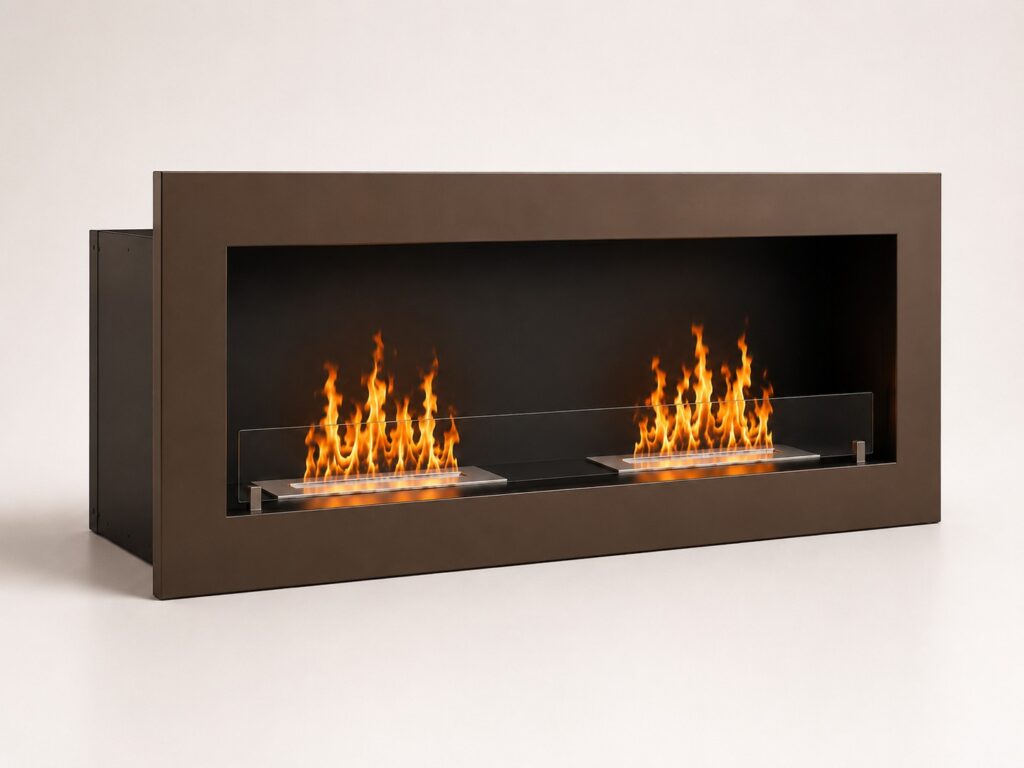
The side view tells the real story
The easiest way to explain the difference is from the side. A wall-mounted fireplace projects outward and keeps its identity as an object placed onto the wall. A built-in fireplace is defined by the part of the body that disappears into the construction, leaving the front as the visible architectural element.
That is why side-view imagery is so useful in this comparison: it makes clear in one glance what a front-facing photograph alone can hide.
Finish changes the mood, not the basic choice
Once the format is chosen, finish becomes part of the visual language of the room. HOMEART is presented in black, brown, polished and white front-finish families. The colour can make the fireplace feel warmer, lighter or more technical, but the underlying decision remains the same: should the fireplace sit on the wall, or become part of it?
A simple rule for choosing between the two
If the customer wants a fireplace that is easier to position as a ready-made product, wall-mounted is often the more direct choice. If the customer wants the fireplace to become part of the wall and part of the architecture, built-in is usually the better answer.
Neither is universally better. The better option is the one that fits the project logic.
The HOMEART Exclusive collection brings both installation routes into one coordinated design language. For a specific project, country or sales channel, request format guidance from the B2B team.