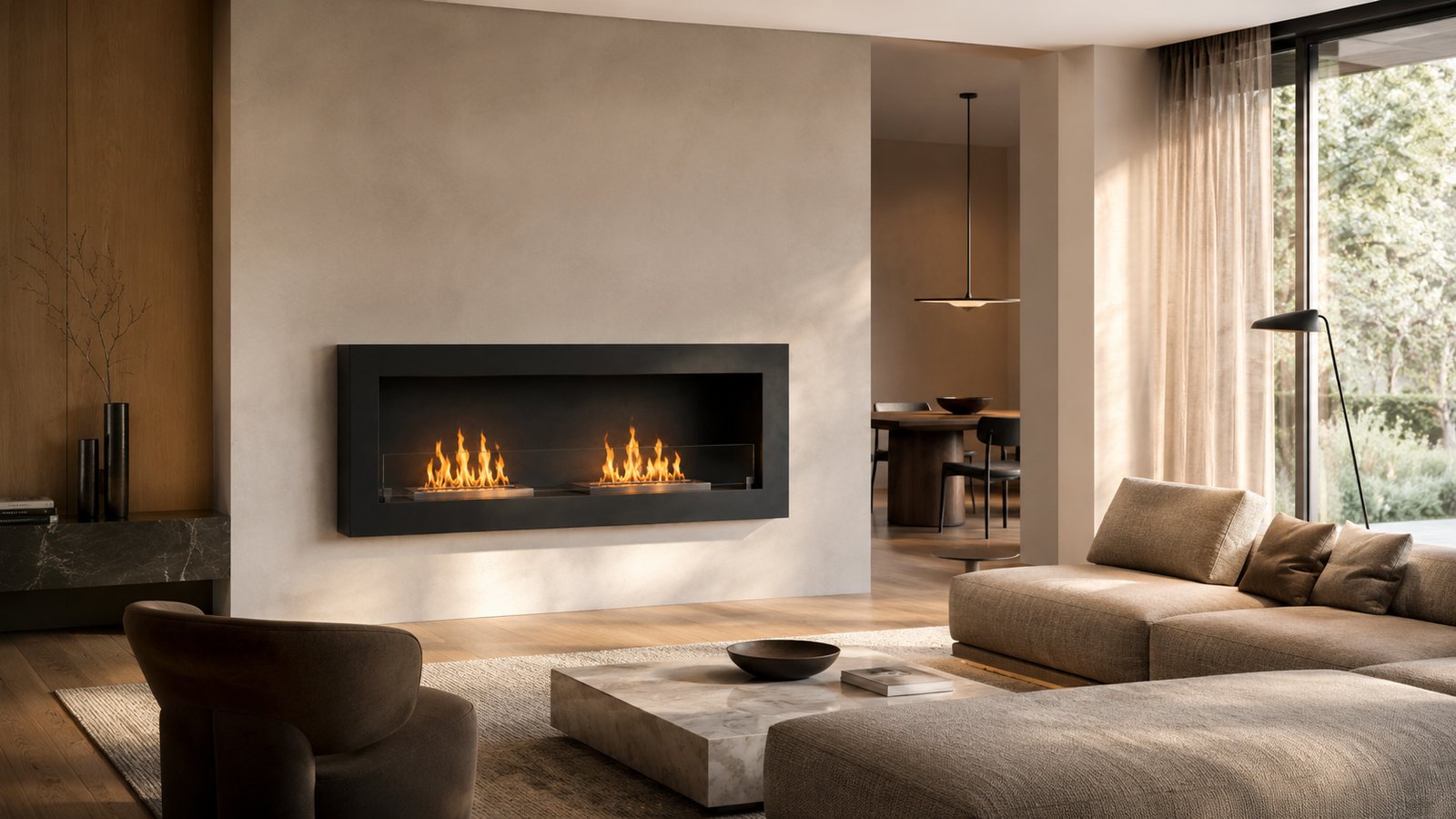
HOMEART is deliberately a focused collection. Rather than placing dozens of unrelated shapes under one name, the range uses a recognisable horizontal architecture across four formats: one wall-mounted model and three built-in versions. For dealers, architects and interior professionals, that makes the collection easier to understand, specify and present as a family.
The idea is simple: the customer can change installation route, scale or finish without leaving the same visual language. That consistency matters in B2B projects, where a collection often needs to work across product pages, showroom presentations and interior specifications at the same time.
One design language, two ways to install
The HOMEART 1200 BOX is the wall-mounted member of the family. It keeps the full fireplace body visible as a finished object on the wall. The HOMEART 1200 Built-In keeps the familiar front proportions but moves the rear cassette into the wall, creating a more integrated architectural result.
That distinction gives the collection two clear project routes without forcing the buyer into two unrelated aesthetics. Our built-in vs wall-mounted guide looks at that choice from the project side rather than only from the front view.
The built-in family grows with the room
Beyond the 1200 format, HOMEART extends the built-in language through 1400 and 1600 versions. The larger models are not intended to look like different product families; they simply give designers more horizontal presence when the wall, furniture composition or room scale calls for it.
For a dealer, this creates a straightforward conversation: start with the installation type, then choose the scale that suits the project. For an architect, it keeps the visual relationship consistent when the fireplace is coordinated with joinery, wall panels or a media wall.
Finish can change the mood without changing the identity
HOMEART is presented in black, brown, white and polished front-finish families. The important point is not to create four different products from one body. It is to let the same architecture behave differently inside the room.
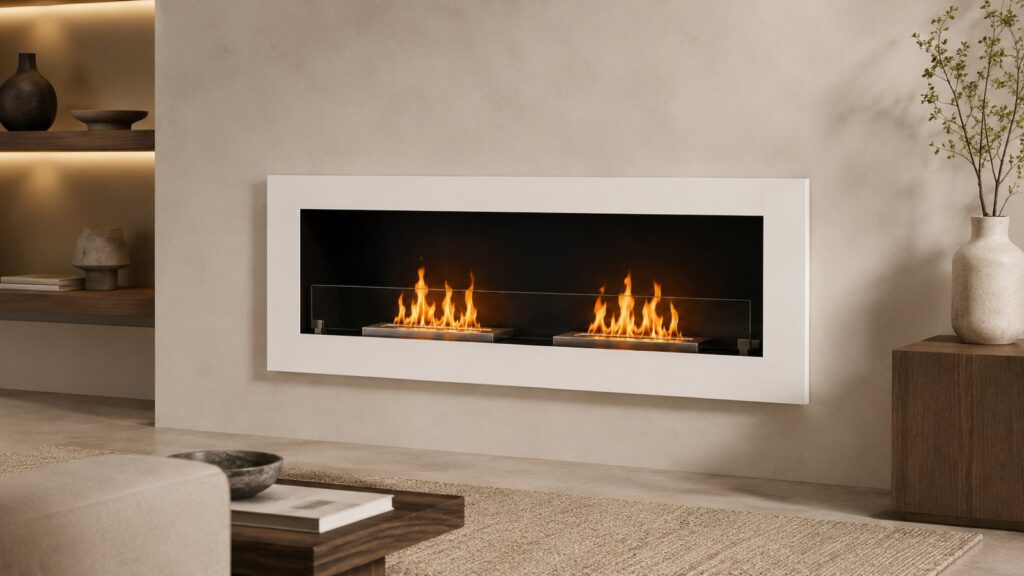
A white front can make the fireplace feel lighter and more integrated with pale walls and softer interiors. It is still clearly HOMEART, but the frame becomes less dominant in the composition.
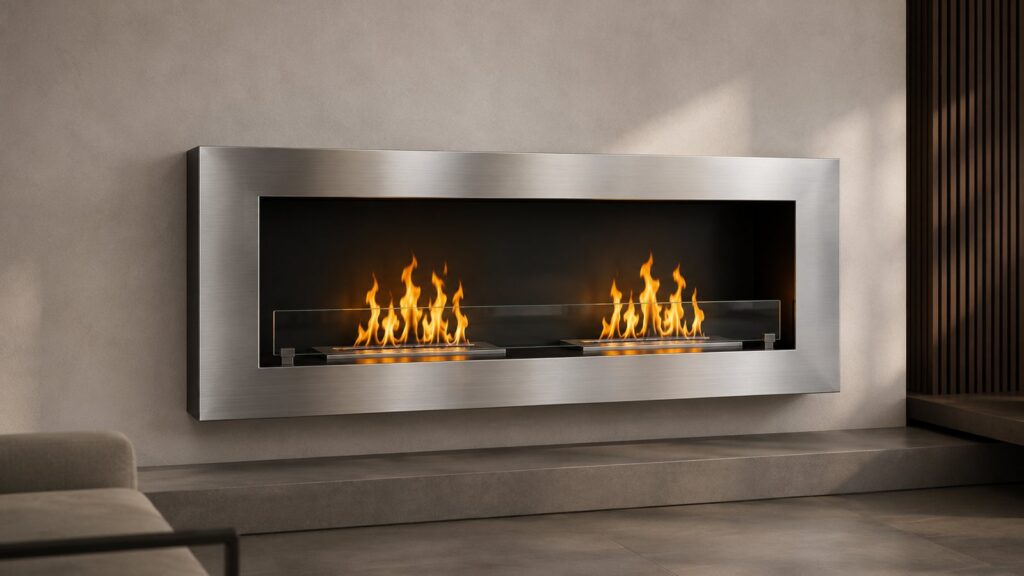
The polished option moves in the opposite direction. The reflective metal catches surrounding light and gives the fireplace a more technical, contemporary presence. For B2B presentation, showing finishes in real interiors is more useful than treating colour as a small line in a specification table.
Why a focused collection helps professional buyers
A narrow range is not a limitation when every format has a clear role. It reduces the number of near-identical choices a dealer has to explain and makes it easier to build a coherent presentation around one recognisable product language.
It also supports internal linking and comparison online: the customer can move from wall-mounted to built-in, or from 1200 to a larger format, without having to relearn the entire product story. That is useful for both merchandising and project specification.
Technical documentation still follows the actual order
The visual family is consistent, but the commercial and technical file still needs to match the specific model being ordered. Final finish, glass configuration where applicable, installation information and the relevant burner documentation are confirmed against the selected configuration rather than assumed from another model.
The same principle applies to TÜV language. Where the documentation refers to a TÜV-certified burner, the claim should remain tied to the confirmed burner configuration and should not be broadened into a claim about independent certification of the complete assembled fireplace unless the supporting documentation specifically says so. See our guide to TÜV-certified burner claims and the Technical & Safety section for the wider documentation approach.
Explore HOMEART as a collection, not as four isolated SKUs
The value of HOMEART is easiest to see when the four formats are viewed together: one wall-mounted route, three built-in scales and a coordinated finish language for European B2B projects.
Explore the complete HOMEART Exclusive collection. For dealer terms, project support and market-specific documentation, request the HOMEART B2B pack.